Thursday, 11 June 2026

Updating history

It's been a while since we posted anything on this blog - we're still here, but life has somewhat overtaken the blog. However, there's something we wanted to document. 

Remember this?
In case the answer is "no", a quick recap: Back in 2017, whilst Stuart was doing some work on the ceiling in what is now our snug/office, he decided to pull off the rather ugly and badly fitted (and disintegrating) piece of wood that was covering the old window lintel. As he did this, that he spotted a tiny, folded up piece of paper, stuffed into the original lintel.
The full story of the discovery is here

It blows my mind a little to realise that we found this little piece of treasure a whole nine years ago (where has that time gone?!). 

We did our best at the time to decipher the handwriting and the Italian, and came up with a patchy, part-interpretation of what was written. For the last nine years the note has been displayed in a frame and proudly shown to anyone who might be interested (and no doubt to some who really weren't, but politely pretended to be!). We had resigned ourselves to never being able to decipher any more of the writing than we already had done, but were satisfied with our interpretation that it was some sort of invoice or receipt for some money to be paid to the council in Pietrabuona for use of the chestnut mill. Within the space of the last 7 months, however, there have been two major breakthroughs. 

First, last November, I was doing some digging around on the history of our local area. Without wanting to go off on too much of a tangent, the reason for this digging around was that Dad, who was here on one of his visits at the time, noticed a series of stone-edged drainage gulleys in our upper terraces. Incredibly, despite having lived here for 11.5 years at that point, we had literally never noticed them before.
We did some literal digging around them and discovered that the top stone goes a fair way back into the ground, but nothing else of note (sadly no hidden gold or even anything mundane to help us date the structures or determine, definitively, their purpose/use - our best guess remains that they were weep holes or some other form of drainage, or that they somehow carried water down the hill for irrigation purposes, or even to the house). 

Anyway, back to the topic of this post. My research to try to get to the bottom of the stone constructions in the terraces was fruitless, but it did renew my curiosity in our 18th century note and I decided to see if I could work out the name of the signatory at the bottom of the note - I thought it might be Francesco and that the surname began with a B. Anyway, to cut a longish story short, I came across an inventory of records held by the Pescia State Archive, through which I discovered that in the 1770s, one Francesco Benedettini held the position of camarlingo (treasurer) for Pietrabuona in the years 1770 to 1773.

Referring back to our note. It is signed by "Francesco Benedettini Camarlingo"! I was willing to overlook the fact that Francesco Benedettini only held the office of treasurer from 1770 to 1773 because our note is dated 8th January 1774 - early enough into the new year for him still to be holding the position and not yet handed over to the person who held the office after him. 

I was thrilled with my discovery, which made the note that bit more interesting for us, to have an actual name that we could pinpoint in real historical documents. 

Fast forward to last week: Stuart had returned from a medical appointment with a page of A4 with very indecipherable doctor-writing all over it. I pondered whether AI would be able to help decipher handwriting and my brain immediately skipped from 21st century doctor's note to 18th century treasurer's note. 

Now, I have to say, I've not been a great fan of AI until now - in my work I loathe receiving emails and articles that have been written by AI thus disguising the natural language of the authors behind them (which may not be perfect, but is entirely more readable and human than the artificially polished stuff that AI churns out), and I feel uneasy about the way AI makes things so quick and simple and eats away at our ability to find things out for ourselves. But I now have to concede that it can be an incredibly helpful tool. 

First things first though. AI is TERRIBLE at reading handwriting (both that of a modern-day doctor and that of an 18th century treasurer). 

It made a really poor attempt at reading the writing I uploaded, and what it came up with was way off, even for the words that I'd already been able to read myself. However, things got a lot more interesting when I fed into it what I had already managed to decipher myself, and with a lot of to-ing and fro-ing between me and the AI, I eventually arrived at the full text of the note. 

If that wasn't satisfying enough, very excitingly I discovered that the note actually contains another name. The name of the person living in our house (probably) and paying the taxes (definitely). The full text is:
Addì 8 Gennaro 1774
Da Gio. Mei Lire quattro per
sua tassa di macina dovuto
a Pietra Bona dico L4 - - 
e piu soldi 16-8 per sua rata 
di taglione dovuto alla Comu 
nita di Pietra Bona per [] anno 1773[] 
dico --------------L--:16-8 
Francesco Benedettini Camarlingo
This translates as:
On the 8th day of January 1774. 
From Giovanni Mei, four lire for his milling tax owed to Pietrabuona, namely 4 lire.  
And furthermore 16 soldi and 8 denari for his share of the communal levy owed to the Community of Pietrabuona for the year 1773. Namely: 16 soldi, 8 denari. 
Francesco Benedettini, Treasurer
I had really struggled with the first couple of words after the date at the top, not understanding what "Gio" and "mei" meant, or even if those actually were the letters that were written, but AI was able to tell me that "Gio." (including the dot, which is clearly present in the note) was a common abbreviation of the name Giovanni, and that "Mei" was, in fact, a common surname in this area. So it seems highly likely (or at least possible - I'll explain why some doubts remain later) that one Giovanni Mei was living in our house in 1774. It was certainly he who paid both a milling tax of 4 lire and a communal tax of 16 soldi and 8 denari to the Community of Pietrabuona, and Francesco Benedettini wrote him a receipt as proof of payment. 

In the 18th century, in the Grand Duchy of Tuscany, the monetary system was divided into lire, soldi and denari:
 
1 lira = 20 soldi 
1 soldo = 12 denari 

This explains the annotation "L--16-8" meaning 0 lire, 16 soldi and 8 denari, and likewise "L4--" means 4 lire, 0 soldi and 0 denari. 

I very much struggled to decipher the second of the years mentioned in the note towards the bottom, firmly believing it read "1777" (and indeed it looks like there's something else scribbled after the year, but I don't think that's decipherable). AI was very cross with me for thinking it said 1777, telling me it was "impossible for a tax from 1777 (four years in the future) to be paid in January 1774; the chamberlains always collected the taxes of the year just ended (1773)". 

AI then softened the blow a bit by conceding that 18th century "3"s were written in quite a different way and that they can be easily misread as a "7" by a modern eye: "In eighteenth-century cursive handwriting (the so-called chancellery handwriting), the number 3 was written with a flat horizontal stroke at the top and a diagonal that descended, then curved at the bottom. This flat initial stroke makes it very easy for the modern eye to confuse it with a 7." I'm still not sure I totally see it, but I do agree that 1773 makes more sense than 1777 in this context. 

I tried to do a bit more digging, wondering: 

1. Why was the note folded up and tucked into the window lintel? 

2. Was Giovanni Mei the owner of the property or a tenant? 

3. Knowing that in 1830 the house belonged to wealthy Pescia landowner/noblewoman Anna Pagni Bordoni, how did it pass from Giovanni Mei to her (if indeed it was owned by Mei in the first place)? 

On these queries AI was less helpful. I have some sympathy for it because digitised local Italian records are quite few and far between - there's clearly a lot of information that's still only available as hard copy original documents, kept either in state archives or in parish records. I had hoped that in the nine years that had passed since our initial investigations more records would have become available online, but that seems not to be the case. 

AI really demonstrated its limitations when it used something that I myself - a floundering amateur researcher of local Italian history with little understanding of either Italian or local history at the time - had written (on this very blog), as a citation to back its up its claims. Not so clever, AI.


This really gave me pause to consider how seriously I wanted to take the output. I am fully confident that we now have the true and correct text and translation of our 18th century note. But the answers to my further questions really had to be taken with a large pinch of conjecture. 

 For what it's worth, the possible answers it came up with were: 

1. Why was the note folded up and tucked into the window lintel? 

It's possible that the note was hidden above the window as some form of superstition - to protect the home from misfortune, lightning, illness, evil spirits, or witchcraft, but it's more likely that the note was put there either for safe-keeping or for ease of access in case of someone coming to check whether Giovanni had paid his taxes. 

2. Was Giovanni Mei the owner or a tenant? 

In particular I wondered whether the house would have been part of the Mezzadria system of farming (where a wealthy landowner provided the land and the farmhouse and a tenant farmer lived there and worked the land, but had to give half of all produce to the landowner), which was prevalent in Italy at that time. 

What AI told me was that analysis of the two taxes mentioned in the note suggests that Giovanni Mei was most likely the owner or a small direct farmer, and NOT a mezzadro (sharecropper). Though I feel there is still some room for doubt here. 

Of the "Taglione" tax, AI says that in 18th century Tuscany, the taglione was a fixed contribution tax based on the ownership of real estate (land or buildings) registered in the local community's land registry. It goes on to say that, by law, Mezzadria contracts required that taxes on land and community taxes were to be paid entirely by the owner of the land, not by the worker, concluding that if Giovanni Mei is recorded as the direct debtor of that share of taglione to the Community of Pietrabuona, it means that he was the owner of that property or that fraction of land. For me, this doesn't 100% clarify whether he was the owner of the land with someone else (a mezzadro) living in the house and working the land, or whether he himself was living and working here, as AI wants me to believe. 

Of the milling tax, AI says that small landowners who milled their own chestnuts from their own small farms had to pay directly to the municipal treasurer to obtain authorization to collect the flour. This seems more in line with Giovanni both owning the place and living/working here, but is it still possible that he paid this tax on behalf of a tenant farmer (or because he, being landowner, was responsible)? 

So I'm still unsure as to whether the house was owned by Giovanni Mei and he lived here, farmed the land and paid his taxes, and folded up his receipt and stuffed it in a safe place to keep as proof of payment and that everything was legal and above board. OR whether Giovanni Mei owned the house and land, had a tenant farmer in place in the house, and paid his taxes, passing the receipt on to the tenant in the house so that they could produce it as proof of payment of taxes if needed. 

AI helpfully tells me that the surname Mei is "historically deeply rooted in the Pescia and Valdinievole area" (though with its "historically deeply rooted" I'm starting to suspect AI of over-egging the pudding). Less helpfully in this instance it tells me that there were both working-class branches (connected to agriculture and milling in the hilltop villages) and landed families with this surname. It tells me "Finding a Giovanni Mei paying the milling tax in Pietrabona in 1774 is a formidable documentary confirmation." (there it goes, over-egging again). 

3. How did the house pass from Giovanni Mei to Anna Pagni Bordoni (if indeed it was owned by Mei in the first place)? 

My third question opened a whole can of confused worms and AI tried to lead me down various paths that it was clear to me were wrong turns. 

Of course it all depends on who Giovanni Mei really was, but IF he was a smallholder who owned this house, it's quite possible that, facing financial hardship (potentially due to radical reforms in local tax systems introduced in the late 1700s by Grand Duke Pietro Leopoldo), he went to the wealthy Pagni Bordoni family for a loan, which he then failed to repay and the property was foreclosed and passed to them. However, this doesn't quite explain why it was in the name of Anna Pagni Bordoni - unless it was her father who became its owner and passed it down to her (we already know from an entirely different document that Anna was her father's sole heir - or at least that there were no male heirs). 

AI then tried to be helpful in making suggestions as to who might have lived in the house in the 1830s, "since Anna Pagni Bordoni lived in a grand palazzo in the historic centre of Pescia" (did she?). It tells me that the house would have been leased out to generate income and was almost certainly occupied by a tenant farmer and that, rather than being a grand mezzadria estate, the house was likely treated by the Campioni family (did I mention that Anna was married to Pietro Campioni?) as an independent, single-family rental unit, where the tenant paid Anna an annual rent in cash, oil, or chestnuts. 

I firmly believe that AI has jumped to some conclusions that may not be entirely accurate, but to give it its dues, it has given me a lot of food for thought, and I'll continue to chip away at the mysteries and think of different ways to probe AI. 

Ultimately, we do now have one more tiny piece in the puzzle, which we are celebrating as a massive win, but the mysteries of our house remain. If anyone knows of a friendly dendrocronista in the Tuscany region please put us in touch! 

Oh, one last thing. We did come up with the bright idea, just over a year ago, to attempt to date our house based on calculating the age of some of the very old olive trees at the very top of our terraces - trees that have been dead for a while, but still standing, theorising that the olive trees would have been planted at around the same time as the house was built. Stuart duly cut one down and produced a beautiful piece of wood, but the rings are so close together in some parts that it has proved impossible to count them (it would need a travelling microscope to do anything approximating an accurate count). So we have a beautiful piece of olive wood, but only a rough estimate of approximately 250 years - which doesn't get us any further than the note from 1774.

Thursday, 24 August 2023

Taking the plunge


Every year as summer digs its heels in and the temperature sits in the high 30's (°C) day after day with barely a cloud to be seen, we fantasize about the relief that having a pool would bring us. As it is currently, the best way of coping is to sit indoors with the shutters closed and artificial light on from when the sun hits us mid-morning until the sun finally drops below the hills opposite, an hour before official sunset. 

Last year (2022) the summer here was BRUTAL in central Italy. We had three months without a single drop of rain, quite high humidity and temps approaching 40°C for the entire time. It was an ordeal that impacts my depression. On top of this I am a self confessed collapsenik and follow avidly the current unravelling of our current civilisation and the ongoing derangement of the climate. As such I've been reading about the increasing danger of wet bulb temperatures as the climate worsens and throw into the mix the return of El Nino this year it made me seriously consider finding some way of cooling down at home without any further delay.

One of the main obstacles to us turning this idea into a reality has been the land we have around us. Italy is 41% hillside, 23% plains and the rest mountain. We occupy a tiny bit of the 41% and as such there is very little flat land here other than a small lawn in fron of the house, which is practically our dog's. Neither is it very big. 

I forget now what series of thoughts lead to the lightbulb moment but I was soon searching the internet for 'IBC pools' as a space saving alternative.

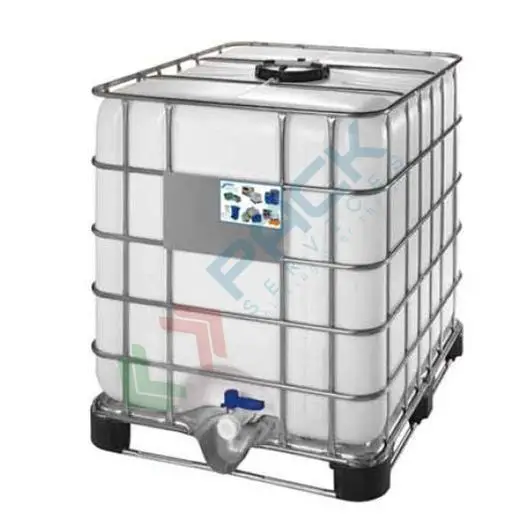
For the uninitiated, IBCs or 'intermediate bulk containers' are plastic containers inside a metal cage mounted on a pallet and are roughly a metre cubed in size and can hold 1000 litres of liquid and can be stacked for transport. Other sizes are available but these are the most common. Note that they come on three types of pallet. Wood, Plastic or metal. I strongly recommend either of the latter as in the picture below as the wood ones tend to rot after 3-4 years.
 
Cisterna IBC 1000 Litri in plastica, rigenerata con otre NUOVA, coperchio 150 mm, valvola di scarico 2", pallet in metallo, colore neutro, Tipologia: Otre Nuova e Gabbia Rigenerata, Capacità: 1000 Lt, Tipo Pallet: Metallo, Ø Coperchio (mm): 150, Omologazione ADR: NO, Colore: Neutro vendita, produzione, prezzi e offerte

We've already acquired more than 20 of these, used so far as growing containers in the garden having had the tops cut off and for harvesting rainwater from the house roof. As such I already knew of two suppliers selling them second-hand for very little money, around €30 each.

IBC raised bed
 
However (WARNING) you can't be sure what was sitting in them before you get hold of them. It could have been an innocuous food product or something incredibly caustic. While I have carefully pressure washed every container we've previosuly bought I wanted to be doubly sure that if  we were going to spend hours sitting in one filled with water there was no danger. After some searching I found suppliers of new IBCs but then also stumbled across a company nearby selling second hand cages with brand new food grade plastic containers inserted for half the price of a new unit. We paid €130 per IBC. 

We decided the site them at the north side of the house so that they would be mostly shaded during the day so as not to warm the water too much. It was also a small dead space between the rainwater harvesting IBCs and the fish pond. Seemed ideal! We had space for three IBCs so we bought three of them.

Having already found a few posts online of people making their own plunge pools I had a vague plan of how to proceed but the most helpful was this one on Instructables, although this plan included a heating element for using during colder months, not something we wanted.
 
We prepared the tanks by marking a level line around the cage and plastic tanks. Removed the plastic containers, cut the cages with a grinder and the plastic tanks with a jigsaw.


So with the tricky items sourced it's time to consider the rest of the bits and pieces and for that you need to consider water hygiene. 
 
With a small paddling pool you can simply dispose of the water and refill regularly. But with anything of a considerable size that amounts to a lot of water wasted. Given that when cut down to size we would use around 750 litres in each tank (total 2250 litres) then we needed to consider maintaining the water for the entire season.

There are two weapons in our armoury here: Chlorine and Filtered pumps.

Chlorine is excellent at keeping pathogens at bay and the water safe for sitting in but it's not without inherent issues that need monitoring. It will gradually reduce the PH of the water and soon it will become too acidic if not kept in check. So if using chlorine you need a means of testing the PH. Whether a digital tester or some simple strips that work like litmus paper.


With that in hand you need a way of amending the PH. Given that chlorine reduces it we have found we only needed to increase it this year, which we did by adding Bicarbonate of soda a tablespoon per day and re-testing until it sat in the sweet spot between 6-8PH. You can buy crystals for this exact purpose that I suspect would be a quicker solution. Equally you can buy crytals to lower the PH. I guess if you over dose one way you can counter it with the latter.

So, now we have chlorine in the water using floaters (pictured below) and slow release chlorine tablets inside them which last around one week.


Next you should consider a pump and filter combination. If chlorine left sitting in 'still' water it can quickly form Hyrdochloric acid. Even with my pathetic level of Chemistry knowledge I understand this is far from ideal for sitting in.

The way you combat this is to have a pump circulating the water keeping it moving, it stops the free chlorine bonding with water to form the aforementioned acid.

There are many types of pumps, some with and some without filters. If they have filters either they are sand or cartridge. Also pumps are rated at cycling a certain amount of water per hour.

We chose a pump that could pump a little more per hour than we had in total in the tanks and with a sand filter as these are low maintenance and the sand apparently lasts seven years before becoming less effective and needing replacing.


Not having too large a pump is important as this negatively impacts electricity consumption.

Once you have your 'pool' and pump/filter you need to connect them.

This is somewhat easier if you only have one 'pool' or IBC but not much more difficult with two or three.

Each pool needs an inlet and and outlet and for these you can find the 'jets' available online as you can with all the fittings needed. It seems here in europe there are two principle manufacturers, Intec and Bestway and from my experience their parts seem interchangeable.
 
NOTE: at this stage of planning you need to make sure that the pump, jets, taps and tube all have the same diameter. We used 38mm but 34mm would work fine in this setup.


You will need to cut a hole of the appropriate size into the plastic containers to accept these jets and make sure they sit in a position where there are no cage bars. So with the plastic containers inside their cages take a rubber washer from one of the jets and mark the holes by drawing around the inside of the washer while holding it against the plastic container. I installed the inlet jet higher up the wall and the outlet a little lower. This seems to be the standard with purchased pools and i guess and floating matter that needs filtering gradully sinks so this makes sense.


With the holes marker you can cut them either with a jigsaw, holesaw or with a steady hand a stanley knife works by pushing the blade through the plastic. I did the latter but be careful about mistakes, they would be tricky to remedy.


With the jets installed, you can connect the pump using the correct sizee tubing (either 34mm or 38mm) directly to the rear of these jets or you can add a tap so that you can close the pools off from the pump for any maintenance without draining the pools down, we did this and have already been thankful we did. I recommend the type of tubing below that has a cut point every metre that leaves you a collar either side of the cut to fit a jubliee clip.


If you have just one IBC you're ready to go. If not then you need to connect them in series using T pieces of the correct diameter.

If you have two IBCs then you will need two T pieces, for every IBC in addition you need two more T pieces. Having three IBCs we needed four T pieces.


38mm T connectors with jubilee clips


With the pools in place and LEVEL and the pump connected and filter filled with sand we filled everything with water, primed the pump (as per instruction booklet), opened the taps and switched on the pump.

After fixing a couple of leaky joints, it was ready for use and what a relief it's been this summer. We put in a couple of robust plastic stools so that you can comfortably sit inside with water up to chest height. You can see from the photo below that it's possible to drop in from the deck onto the stools. Depends how agile one is of course and this setup is purely because the deck is on top of the adjacent rainwater catchment tanks.


Next year I will most likely fit a ladder such as this to allow easy access into one of the pools for any visitors unable to clamber in and out without one. This will fix to the deck and descend into an IBC nicely.
If you are installing the IBC in a more freestanding setting the an even cheaper option for easy access could be standard pool ladder such as this below.


The water has ranged from 20-27°C this summer, entirely weather dependent and seems the night time temps are the largest factor. Even at the high end it's still very much cooling given that normal body temperature is 36-37°C. At 20°C it takes a little more commitment to sit into (a large pool you can simply jump in, these you need to sit down which is a whole other thing) but the benefits of cold water immersion are now becoming well documented so I'm embracing my inner Wim Hoff. Although he'd laugh at the 'warmth' of these pools, he prefers ice in his.
 
Fever - What you need to know - Rossmax | Your total ...

Once this season is over I'll leave the water to stand for three days or more to allow the Chlorine to gas off leaving the water safe for watering plants or storing for next spring in other IBCs that we will have below in the garden. I'll cover them over for winter and winterise the pump before freezing temps arrive. When spring arrives i'll give them a thorough clean and refill.

So what has this project cost?

The IBC tanks were €130 each
The pump €180
Pump grade sand €25
The jets (one pair) €25
The taps for the jets (one pair) €50
The T pieces (one pair) €12
The tubing €25
 
TOTAL €435 for one pool, each extra pool adds around €180

I must add that these costs excluded a little concrete so that i could make 8 level pads for the IBCs to sit on and the decking on the photo from you descend. Next year i'll probably clad the in reclaimed pallet wood and fix boards around the top edges as per the instructables article above.
 
SO...Worth it? Unequivocally. Why? Well, in the coming years these little pools could literally be a lifesaver as the climate deranges further. Deaths from heat in the U.S.now exceed deaths from shootings (trying to remember where I read this, will update blog when I've found it), and there are around two mass shootings per day on average in the U.S. but i'm digressing slightly.
 
As I've already said at the top of the post. Prior to this year, summers were a case of putting the house into complete darkness during the day and sitting indoors. When this scenario is three months long it makes the summer a season to dread. This year however these pools have changed that. We still need to put the house into darkness of course, but we need not fear going outside and getting hot. We can consider doing some small activities knowing we can instantly cool down. Activites that we would otherwise have avoided as we had no convenient way of cooling quickly. The summer has just become less dreadful. Sitting in the pools with a book, enjoyable even. 

Any questions of clarifications then comment below please and i'll aim to improve the post.


Saturday, 14 August 2021

Melting moments

As  I sit down to write this blog post the temperature gauge is reading 40.3C outside, and we have yet to reach the hottest point of the day. In the last week we've had a run of particularly hot weather, and the temperature has already exceeded 40C at least twice in the last couple of days. We barely know what to do with ourselves. From about 10am every day the house is plunged into darkness as we go around closing all the windows, the shutters, and doors to keep both the sunshine and the hot air out, and it stays like that until about 8pm when the evening air just starts to cool down slightly and we rush around the house throwing open all windows and doors to capitalise on the temperature differential. So, for the best part of 10 hours each day we've been hiding indoors in what feels like a cave through lack of natural daylight - yet it isn't anywhere near as cool as a cave should be or would be! 

Of course, looking around at the rest of the world we know we are not alone in this extreme heat, and in fact we realise we should be grateful that the mercury has "only" hit 40C. This week in Sicily the temperature reached a record (for Europe) 48.8C. I simply cannot imagine how uncomfortable that must feel - even earlier this week when we took a trip into Pescia for some shopping it almost felt as if my eyeballs were burning. Thankfully, here in our area we have not been affected by forest fires this summer (so far at least - and long may it continue that way), whereas so many other places around the world have not been so fortunate.


So it's a Saturday afternoon and we are stuck indoors - having spent Saturday morning driving around in the car with the air conditioning on (not something we usually treat ourselves to - usually having the windows open in the car suffices, but today we gave up on that after 10 hot and sweaty minutes and resorted to the A/C - that is with the exception of when we came to one particularly steep hill at which point we had to turn the A/C off in order to give the struggling car a fighting chance to make it to the top of the hill!). Our mission this morning was to try to find a small fan (mission accomplished, and in a blissfully air-conditioned electricals shop to boot) so that this afternoon, Stuart can attempt to make a DIY swamp cooler.

Last week Stuart successfully made a DIY air con unit that runs by blowing air over a block of ice inside a coolbox; this weekend it is the turn of a swamp cooler, which uses water evaporation to cool the air, rather than needing to rely on blocks of ice (which only remain blocks of ice for a limited period). Here's the theory: https://enviroinc.com/diy-swamp-cooler/.

And here's how the coolbox air con unit was made:


One cool box.

A cool box, a fan and a piece of plastic pipe.


Hole cut in the lid for the fan.

And a hole cut in the lid for the pipe outlet.

Fan and pipe inserted


Ice added to the cool box.

Cooling air.


We are thankful that, while the temperature has been high for many weeks now, it is only really the last week that has been a really significant struggle to cope with. Up until this week we had been managing to keep the house at a reasonably comfortable temperature, and although outdoor temperatures have regularly hit the mid 30s they haven't (until now) been so extreme that we haven't been able to do anything. Having said that, the mid to high 30s is still pretty hot and our work rate always slows significantly in these hot summer months; in part due to a higher work load for me in the office, in part due to the weather not being conducive to physical work, and in part due to there being fewer necessary tasks to get done. The main jobs that still need doing are the cutting of the grass on the terraces and getting the winter firewood ready and under cover.

Strimming the terraces has been slightly different this year.

To start with, there was the small issue of a broken rib. Having had undiagnosed vague aches and pains in my left-hand side for a few months, everything fell into (or more precisely out of) place one night when, during the night I turned over in bed and felt (heard, even) a crunch and crack and something that rather exceeded the amount of pain I'd previously been experiencing. It was obvious to me that I'd done some damage to my rib/ligaments/cartilage/, but I couldn't quite believe that breaking a rib could be, well, so easy. Over the next 4 or 5 days it was extremely uncomfortable, but it was 10 days before I could get to see the doctor, and another 4 days before I was able to have an x-ray, by which time the pain was subsiding.

Since the x-ray wasn't classed as urgent, I had to go all the way to a medical centre on the outskirts of Florence for it (nowhere closer had an availability for a non-urgent case) - a long and tiring drive on the motorway in rush-hour traffic for Stuart and I could barely look him in the eye when I came out of the medical centre to tell him that I would need to go back again two days later to collect the results (on CD-ROM!). I felt somewhat vindicated when I did pick up the results though:


Your guess is as good as mine. Good job the experts know what they are looking at.

It seems strange to say I felt relieved to have a broken rib, but I was relieved that the hassle of the journey to Florence and back had been justified and relieved to have an explanation for the vague aches I'd been having for a while, and relieved to have a cast iron, concrete "excuse" for having taken things easy for a short while.

Of course the rib episode happened just at the point at which the terraces were needing another strim and I had been planning to do them that week. With the grass and other vegetation growing like crazy, Stuart called in a favour from a friend who he'd been doing some work for and who had promised to repay him by doing a day's work for us, so Cristian came and cut the grass one day, and the following day our friends Paul & Kathy gallantly came to finish the job off. We were truly grateful to them all, and I can't tell you how frustrated I felt seeing other people work without being able to get stuck in myself! 

Thankfully, the pain subsided considerably after a few days, and a few weeks later I was back up to speed, back cutting the grass on the terraces with a new, much lighter weight strimmer bought thanks to some very generous help from my Dad.

Back in the game!!

The other, more significant, difference in strimming this year is that we made the decision back in the spring not to cut the vegetation on the banks, instead only cutting the flat parts of the terraces. We did this for two reasons, one is that the banks have been becoming increasingly unstable in recent years, and constantly cutting the grass/plants growing on them does some considerable damage, whereas leaving the vegetation intact helps to stabilise the banks as the roots of the plants hold the soil together. The other reason was to leave all the flowering plants on the banks for the bees and other insects to feed from. 

The decision not to cut the banks has had a couple of effects. First, it has made the whole strimming process so much quicker, easier and less arduous. Whereas it last year (when we cut the banks as well as the flat terraces themselves) it had been taking around 17 person-hours to do the whole lot each time, this year it hasn't taken much more than 10 person-hours each time. Secondly, we have been thrilled to see the changes in nature itself - the succession of beautiful wild flowers, the increase in insect life and even the return of one wild flower (an orange lily) that we last saw in the year that we moved here, but had not seen on our property since then. So it seems it's a win, win!

Pretty in pink centaury.

Lilium bulbiferum var croceum (Orange lily) - it's six years since we last saw one here.


Nature creates such beautiful colour combinations - centaury, sheep's bit scabious, st John's wort and more. 

The morning sun gives everything a beautiful summery meadowy feel.

Sheep's bit scabious.


This month (last week, in fact) we finished the other big job of the summer, that of moving all the winter firewood down from the storage area by the gate to the winter woodpile near the house. We had delayed bringing it down this year because we are still hosting 36 bee hives on the small flat piece of land next to the gate. Usually the beekeeper brings them here in the spring and leaves them for roughly 3-6 weeks, purely for the flowering season of the acacia (robinia) trees. This year, the acacia flowering season (and thus the acacia honey season) was disastrous. No sooner had all the flowers opened than we had a period of very wet, very windy weather and all the blossoms were knocked off the trees. It was so bad, that local beekeepers have not been able to produce any of the highly prized acacia honey this year.

Unlike in previous years when Alain, the beekeeper, has moved his hives on to another location for the sweet chestnut flowering season, this time he decided to keep them here at our property for the whole summer - we guess he will be producing millefiori (a thousand flowers - essentially a generic honey that isn't a specific flower type) during this period, but he has said he wants to leave the hives here for the ivy flowering season, which may well result in him (or rather his bees) being able to produce a monofloral honey (ivy).

So usually we would wait until the bees had gone before doing any work in the area close to the hives, but with time ticking away we decided to brave it and tackle the wood pile. It felt like a particularly brave decision for me after having suffered a particularly nasty bee sting a few weeks previously, followed by 4-days of a very (very) puffy face, but after Stuart had done the first few tractor loads alone and reported back that the bees were calm and not bothering him, I joined in, and after approximately 20 loads (over the course of a few days) we had brought down all the wood for the winter.


Aside from those large jobs, we have of course been tending to the veg garden - including Stuart brewing up some 'actively aerated compost tea', or AACT, with which to fertilise our crops.

The recipe is: one kilo of worm castings with four tablespoons of molasses, aerated for 36 hours. This acts to increase the microbial life of the (already incredibly rich) worm castings fourfold. 


(The dog is not not an essential part of the process or recipe).

And we've had some decent crops from our veg garden already: tomatoes, soya beans, snake beans, cucumbers, aubergines, peppers, squashed, garlic, onions, chillis, strawberries, blueberries, raspberries, and more!


In these warm months we've really been enjoying the pond we built last autumn - we jokingly refer to it as the "Zen garden", but it really is relaxing sitting next to it in the shade, listening to the trickle of the water in the fountain and watching the fishes.


On the subject of fishes, we appear to have created a very healthy environment for them - having added to the pond six goldfish and two Koi carp back in October... we now have hundreds of baby fish. It has been fascinating watching the young fish develop and grow. At first they were so tiny it took a double check to see that they really were little fish. We were convinced the numbers would dwindle significantly through natural selection, predation, etc., but over the months a very large number of them have continued to grow and develop. There are fish that are still dark brown/black, and others that are well on their way to developing their orange and golden colourings. Quite what we'll do when they reach full size we're not sure!


Our garden flowers have been particularly beautiful this year - nurturing them (some from seed, others bought as plants) has proved to be a wise investment of time and effort.


And as always, we are fascinated by the nature that surrounds us and we try at every opportunity to record it!

Yet another stinkhorn fungus (and yes, they do stink).


Aesculapian snake, constricting a mole.


Lesser stag beetle (Dorcus parallelipipedus).


Male broad bodied chaser (Libellula depressa).


A type of bee-fly (Exoprosopa).

Wasp spider (Argiope bruennichi),

Peacock fly (Callopistromyia annulipes).


Aside from tending the land and hiding from the heat, we've had lots of opportunities over these summer months to catch up with friends and neighbours at various outdoor social evenings, made lots of use of our pizza oven and rocket stove for outdoor cooking (another attempt at keeping heat out of the house as well as being an enjoyable way to cook and socialise), we've had enjoyable treats in the form of a meal out for our anniversary in June and a meal out on my birthday in August (complete with flashback to ~5 years ago after finding ourselves stuck in the blazing sun in a car park with a car that wouldn't move - although thankfully on this occasion we were quickly rescued by kind strangers and quickly identified (and later fixed) the problem), oh and we have both had our first dose of the Pfizer vaccine, with second doses due for us both in the next 10 days.


This is a sight you don't often see - both of us scrubbed up for a lovely anniversary meal.

Normal service resumed.

And not forgetting our boy.